
Quick answer: Peruvian coffee is arabica grown mostly by small farmers on the slopes of the Andes. It is typically mild, with light to medium body, gentle acidity and nutty, chocolate and subtly sweet notes. Chanchamayo and the Cusco area are well-known regions, and Peru is a major source of Fair Trade and organic coffee.
Most people reach for Brazilian or Colombian coffee, but Peru grows and exports a lot of good arabica too. Here is what Peruvian coffee tastes like, where it comes from and how to roast and brew it.
Peruvian coffee is usually a mildly acidic blend of coffee beans that are flavorful and aromatic. Peruvian blends are light-bodied and great for morning coffee blends. However, beans from Peru are also used in dark roast blends and as a base for flavored coffees because of their light flavor. The flavors that usually stand out in the best Peruvian coffees are vanilla, nutty, and subtly sweet that sets it apart from all other beans.
In this guide 6 sections
The History of Peruvian Coffee
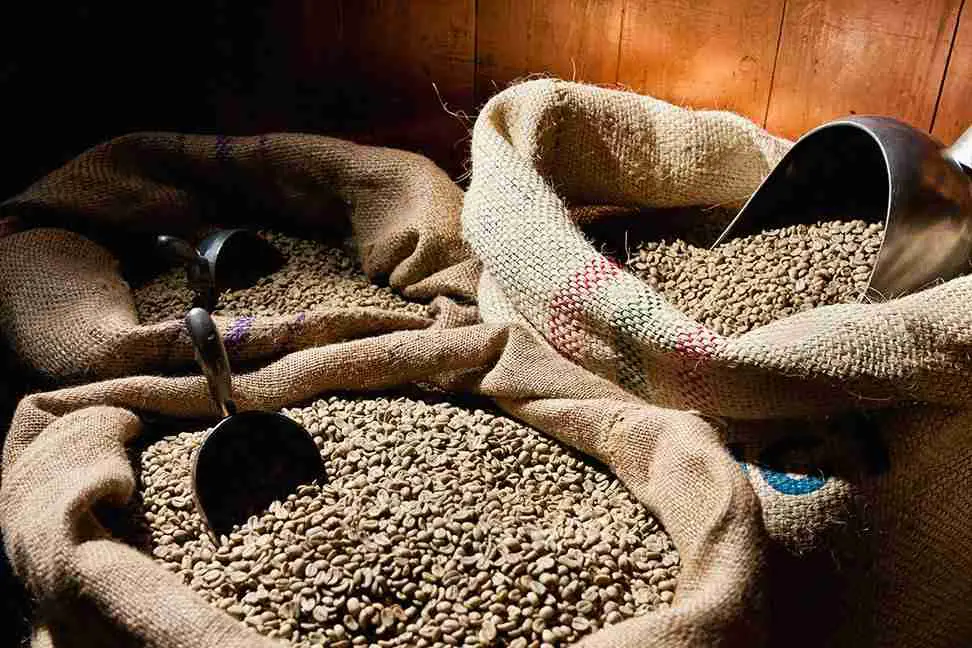
Coffee production started in Peru in the 1700s and has been going on since then. There are heirloom plants still being grown today. Today most Peruvian coffee comes from small family plots rather than large estates. Peru has a global reputation for growing traditionally cultivated, and high quality Arabica beans. These Peruvian farmers have micro growing operations and hand pick ripe coffee cherries from May to September. Most farmers hand process the cherries from the pulping to fermentation.
After the coffee beans have been prepared farmers carry these beans to the nearest town, a trip that can take up to eight hours to sell their produce. Because of the long travel times and lack of warehouse storage, many times these farmers have to sell their beans at vastly discounted prices to traders.
Is Peruvian coffee Fair Trade?
With new financial instruments and trading practices, Peruvian farmers now belong to organizations that help them grow their businesses. Peru has become one of the largest suppliers of Fair Trade certified coffee, so certified Peruvian beans are easy to find.
The increased prices and international development agencies has helped Peruvian farmers improve their coffee quality, processing, exporting, and training for farmers to become certified organic producers.
What does Peruvian coffee taste like?
As we said before Peruvian coffee beans are mellow and pleasant with some mild acidity and light body.

Chanchamayo Beans
Each crop is unique and there are different flavors that change every year. Wet processed coffee from Chanchamayo Valley in Peru has a reputation for the best-processed coffee. The highest grade of coffee is AAA and these Certified Organic farmers provide many of the greatest specialty coffees.
These beans exhibit a medium / light body with bright acidity and delightful flavors. When brewed, good Chanchamayo beans are smooth and delicate with a nutty and chocolate flavor with a sweet citrusy aftertaste.
Urubamba Beans
Urubamba beans are grown in the southern regions of Peru near Cusco and Machu Picchu. This coffee is special and has a rich aroma that is very unique. One of the reasons why they are so special is because of the area they are grown in. They are grown on the western slopes of the Andes mountains at high elevations of about 1,200 meters above sea level or higher. This makes the beans more flavorful.
Where to Buy Peruvian Coffee Beans
With all this talk about how great Peruvian coffee beans are, you may be wondering where you can buy some. Here is a list of our favorite Peruvian coffee brands.
Tres Cumbres, Whole Bean, Peruvian Coffee
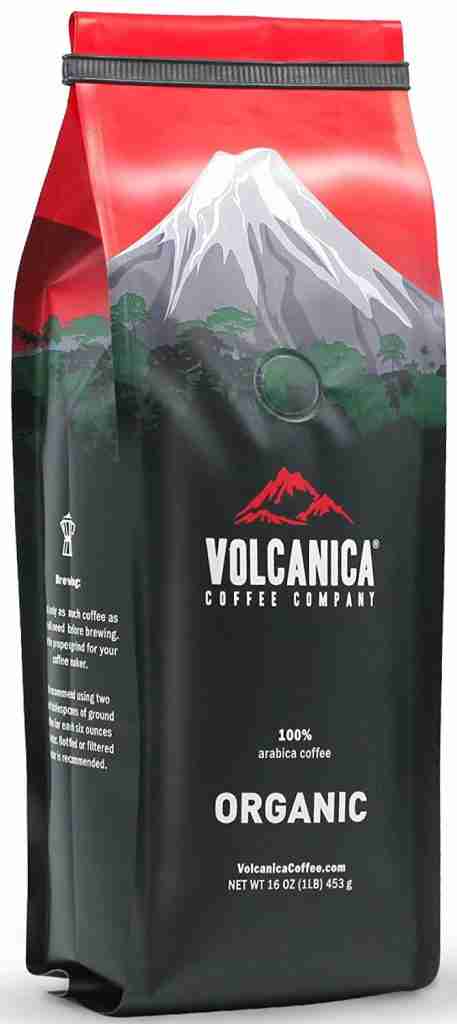
Tres Cumbres sources from the Chanchamayo region and is grown on the slopes of the Andes mountains.
Java Planet, Organic Whole Bean, Peruvian Single Origin Coffee
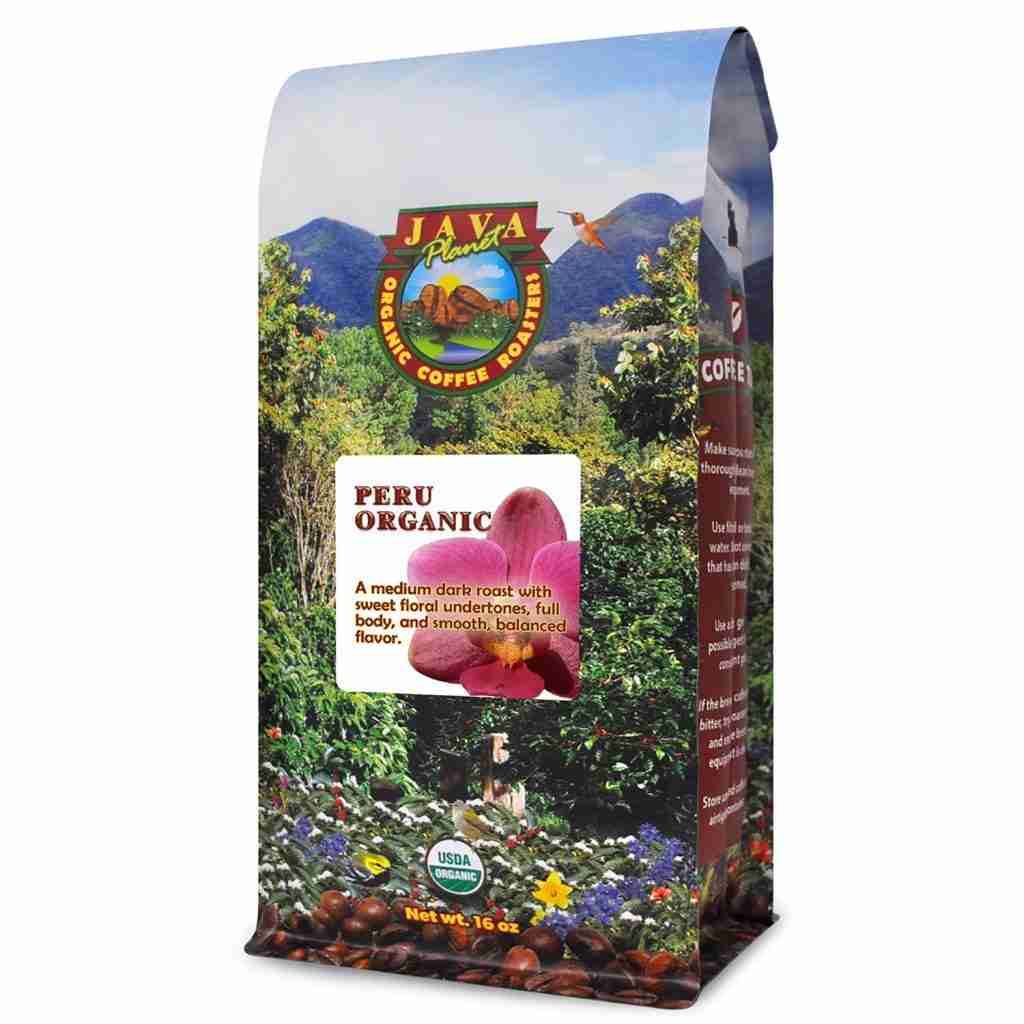
Java Planet also sells a great tasting coffee with no bitter or burnt taste. The beans are certified organic arabica, and Java Planet is a small family-run roaster.
How should you roast and brew Peruvian coffee?
If you roast your own (see how to roast coffee beans at home), here is how to handle beans from Peru.
When roasting your beans you want to accentuate their unique characteristics. The mildness and lack of bitterness make these a great coffee for a medium to dark roast coffee. A medium roast draws out the gentleness of the bean and flavor profiles of the unique bean. With darker roasts, you bring out more chocolaty and deep flavors. This should be done just enough to bring out the natural oils and flavors, but not burn the bean. This is just a little bit after the second crack.
Brewing Peruvian Coffee
Due to how mild these beans are they are perfect for many types of brewing. Any brewing method works and will yield you a tasty result.
- Drip
- Espresso
- Pour Over
- French Press
- Stove-top
- Percolator
- And many more…
Like Peru’s mild, sweet profile? Compare it with other origins in our guide to single origin coffee or the earthy, full-bodied Sumatran coffee, and browse more coffee beans from around the world.
Frequently asked questions
Is Peruvian coffee good?
Good Peruvian coffee is clean, mild and sweet, with nutty and chocolate notes. It is less intense than many African coffees, which makes it an easy everyday coffee.
Is Peruvian coffee acidic?
Most Peruvian coffee has mild acidity, although high-grown Chanchamayo beans can be brighter. A medium to dark roast softens acidity further.
What roast is best for Peruvian coffee?
Medium roasts keep its gentle, sweet character, while a dark roast brings out chocolate notes. Stop shortly after second crack so the beans do not taste burnt.
How should I brew Peruvian coffee?
Any method works: drip, pour-over, French press, espresso or a stovetop pot. Its mildness makes it forgiving.