
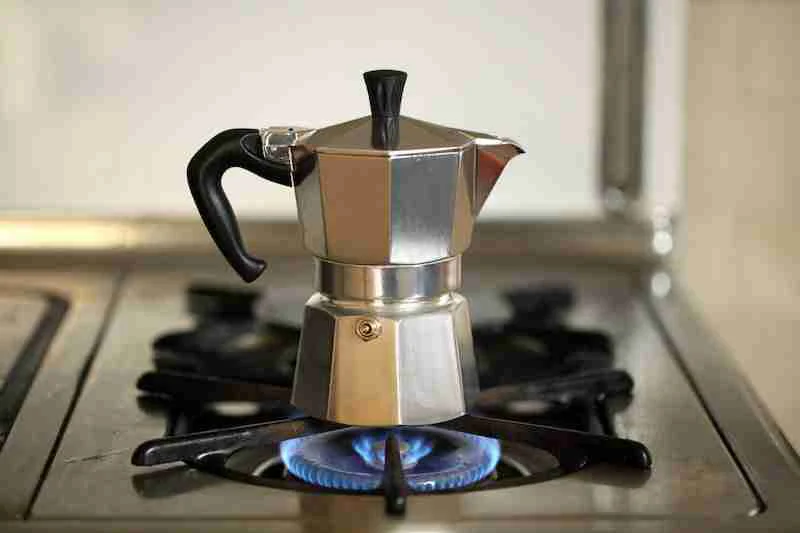
Quick answer: To make espresso on the stove, use a moka pot: fill the base with hot water to just below the safety valve, fill the basket loosely with medium-fine coffee without tamping, screw the pot together tightly and heat it on low to medium. Take it off the heat as soon as the top chamber is full, before it starts to sputter.
Affiliate disclosure: Coffee Informer is reader-supported. As an Amazon Associate, we earn from qualifying purchases made through links on this page, at no extra cost to you. It never changes which products we recommend. See our affiliate disclaimer.
You don’t need an espresso machine to make strong, espresso-style coffee at home. A moka pot (stovetop espresso maker) does it with nothing but a stove. Below is the step-by-step method, how a moka pot compares with a real espresso machine, how to keep it clean, and the stovetop espresso makers worth considering.
In this guide 7 sections
How to make espresso on the stove, step by step
We will be using an Original 3 Cup Bialetti Moka Express for this example. A classic.
Step 1: Grind and fill the basket
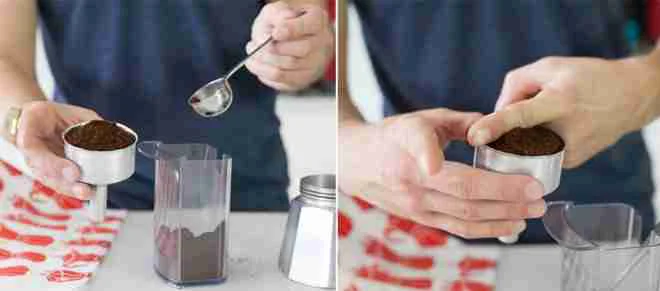
Grind enough coffee to fill the filter basket. Use a medium-fine grind: Bialetti recommends a “medium grain, coarser than the blend for espresso”. Espresso-fine coffee can clog the basket and make the pot sputter or leak. A burr grinder makes this easy to get right.
Fill the basket loosely to the top and level it with a finger. Don’t tamp or press the coffee down.
Step 2: Fill the base with hot water
Heat water in a kettle until it is hot; just off the boil is fine. Starting with hot water means the pot spends less time on the stove, so the coffee in the basket doesn’t “cook” before water reaches it.
Pour the hot water into the base up to just below the safety (pressure relief) valve, never above it.
Step 3: Insert the basket
Drop the filled basket into the base. Wipe any loose grounds off the rim so the pot seals properly.
Step 4: Screw the pot together
Screw the top on firmly. If it isn’t tight, pressure escapes at the join and the pot can leak from the middle.
The base will be hot, so hold it with a towel while you tighten, and never use the handle for leverage.
Step 5: Heat gently
Put the pot on low to medium heat. Too much heat makes the coffee taste burnt and bitter. On gas, keep the flame no wider than the base of the pot. Every stove is different, so adjust as you go.
Step 6: Take it off the heat at the right moment
As pressure builds in the base, hot water is pushed up through the coffee and coffee starts to flow from the spout into the top chamber.
If it spurts out violently, turn the heat down. If nothing comes up after several minutes, turn it up a little.
Take the pot off the heat as soon as the top chamber is full and before it starts to gurgle and hiss; Bialetti advises removing it from the heat once the pot is full. The gurgling phase adds harsh, bitter flavours. To stop brewing straight away, you can run the base under cold water.
If your pot spits and splutters all the way through, see our guide to moka pot sputtering.
Step 7: Serve
Give the coffee in the top chamber a quick stir and serve it straight, diluted with hot water, or with steamed milk.

What is a moka pot?
A moka pot is an Italian stovetop coffee maker made of aluminium or stainless steel. It has a base (boiler) for water, a funnel-shaped filter basket for the coffee, a gasket and filter plate that seal the two halves, and a top chamber where the brewed coffee collects. It makes strong, concentrated coffee with no electricity or expensive equipment.
How does a moka pot work?
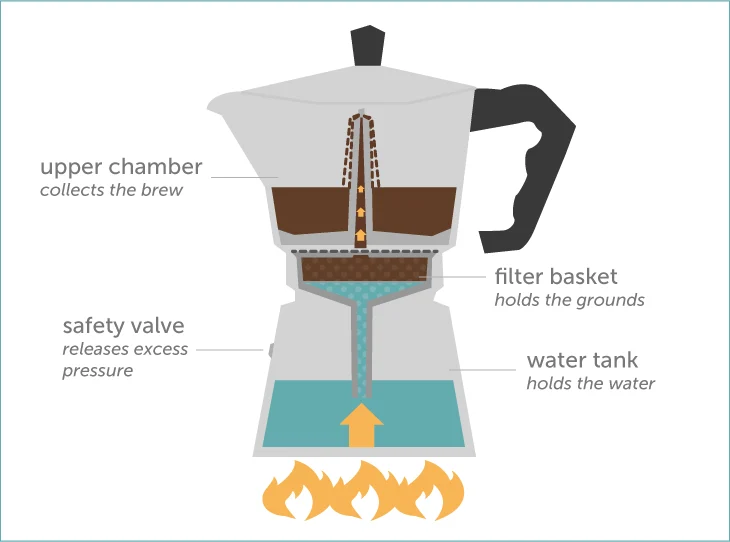
As the base heats, pressure builds above the water and pushes it up through the funnel, through the coffee grounds and into the top chamber. Bialetti puts that pressure at about 1.5 bar, compared with the 9 bar or so used by espresso machines.
Is moka pot coffee real espresso?

Not quite. Moka pot coffee is much stronger and more concentrated than drip coffee, but because it brews at much lower pressure than an espresso machine it doesn’t produce true espresso or the same thick crema. Think of it as a strong, espresso-style coffee.
An espresso machine gives you far more control over pressure and temperature and more consistent shots, but it costs much more and needs a good grinder and more skill. If you want real espresso, see our picks for the best espresso machines. If you want strong coffee quickly and cheaply, a moka pot is hard to beat.
How do you clean a moka pot?
Let the pot cool, unscrew it, knock out the grounds and rinse every part in warm water. Bialetti advises against detergent on aluminium pots (it can taint the metal and the coffee) and says its stovetop makers must not go in the dishwasher. Dry every part completely before reassembling to prevent oxidation, and occasionally clean inside the funnel and the column in the top chamber, where coffee residue builds up; a pipe cleaner works well. For descaling and burnt pots, see how to clean a stovetop espresso maker.
Best stovetop espresso makers
How we chose
These picks are based on research, not on testing the pots ourselves: we looked at maker reputation, materials, which hobs each pot works on, size options and whether it is still sold. Product details were checked against the manufacturers’ own pages in October 2026. Aluminium pots heat quickly and are the traditional choice; stainless steel is easier to look after and, depending on the model, can work on induction.
| Model | Type | Material | Induction |
|---|---|---|---|
| Bialetti Moka Express | Moka pot | Aluminium | No (adapter plate needed) |
| Bialetti Brikka | Moka pot with crema valve | Aluminium | No (separate induction version) |
| Bialetti Venus | Moka pot | Stainless steel | Yes (except 2-cup) |
| Cuisinox Roma | Moka pot | 18/10 stainless steel | Yes |
| Alessi Pulcina | Moka pot | Aluminium | No (separate induction version) |
| Alessi 9090 | Moka pot | 18/10 stainless steel | Yes |
| Tops Rapid Brew | Percolator | Stainless steel body | Not stated |
| Coletti Bozeman | Percolator | 18/8 stainless steel | No (separate induction version) |
Bialetti Moka Express Stovetop Espresso Maker
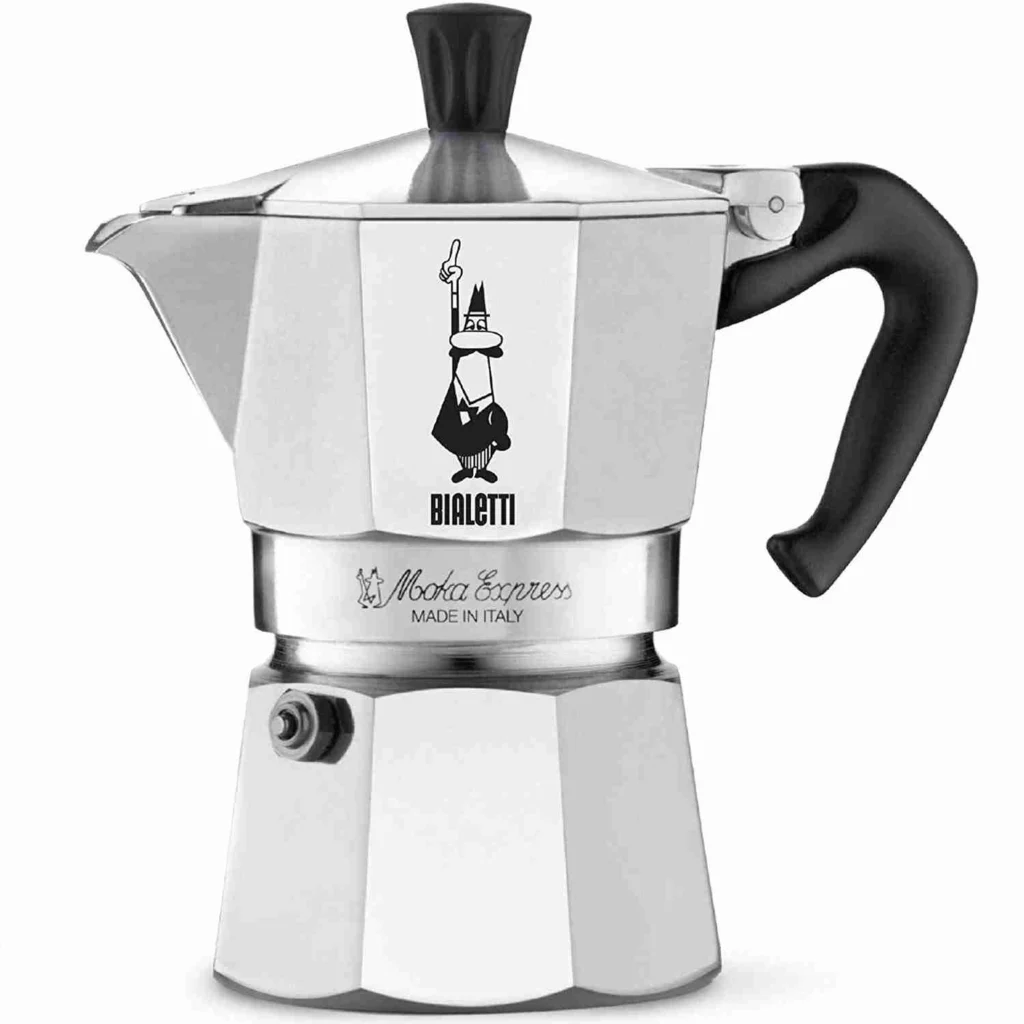
The Moka Express is the original aluminium moka pot and still the classic choice. Bialetti is the best-known name in stovetop espresso makers, and you’ll see it again in this list.
Its eight-sided aluminium body heats quickly. It works on gas and electric hobs; for induction, Bialetti sells an adapter plate. Sizes on Bialetti’s US site range from 1 to 18 cups (1, 3, 4, 6, 9, 12 and 18).
Click here to check pricing and to read more reviews
Pros
Makes strong, espresso-style coffee
Quick and easy to use
Easy to clean
Different size options
Beautiful Italian design
Cons
Not dishwasher friendly
Not induction-compatible without an adapter
Bialetti Brikka Stovetop Espresso Maker
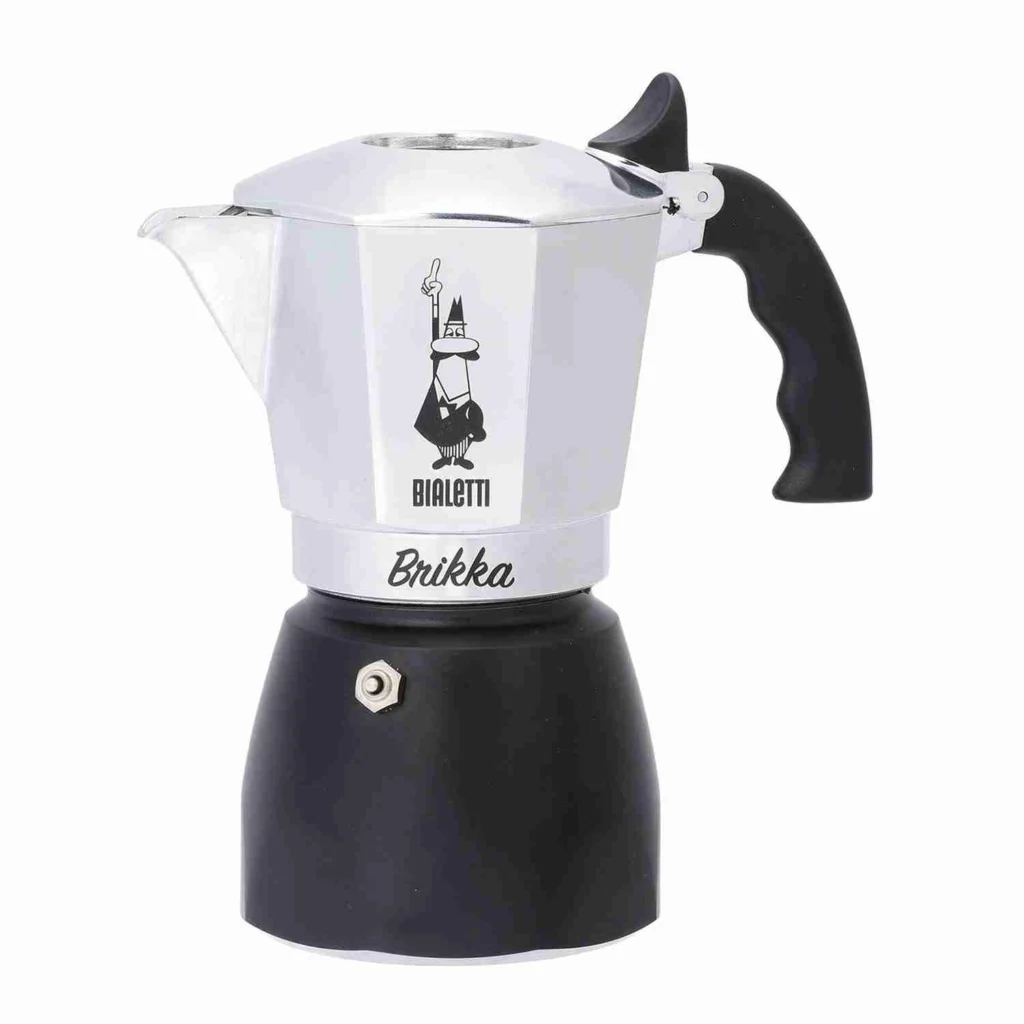
The Brikka adds a pressure valve to the classic moka design, so pressure builds higher before the coffee is released.
The result is coffee topped with a layer of crema, the closest a stovetop pot gets to an espresso machine shot. The standard Brikka is aluminium; Bialetti also sells a separate induction version.
Click here to check pricing and to read more reviews
Pros
Higher pressure brew
Crema-producing valve
High-quality Italian design
Cons
Inconsistent brewing
Hand wash only
Bialetti Venus (Stainless Steel, Induction)
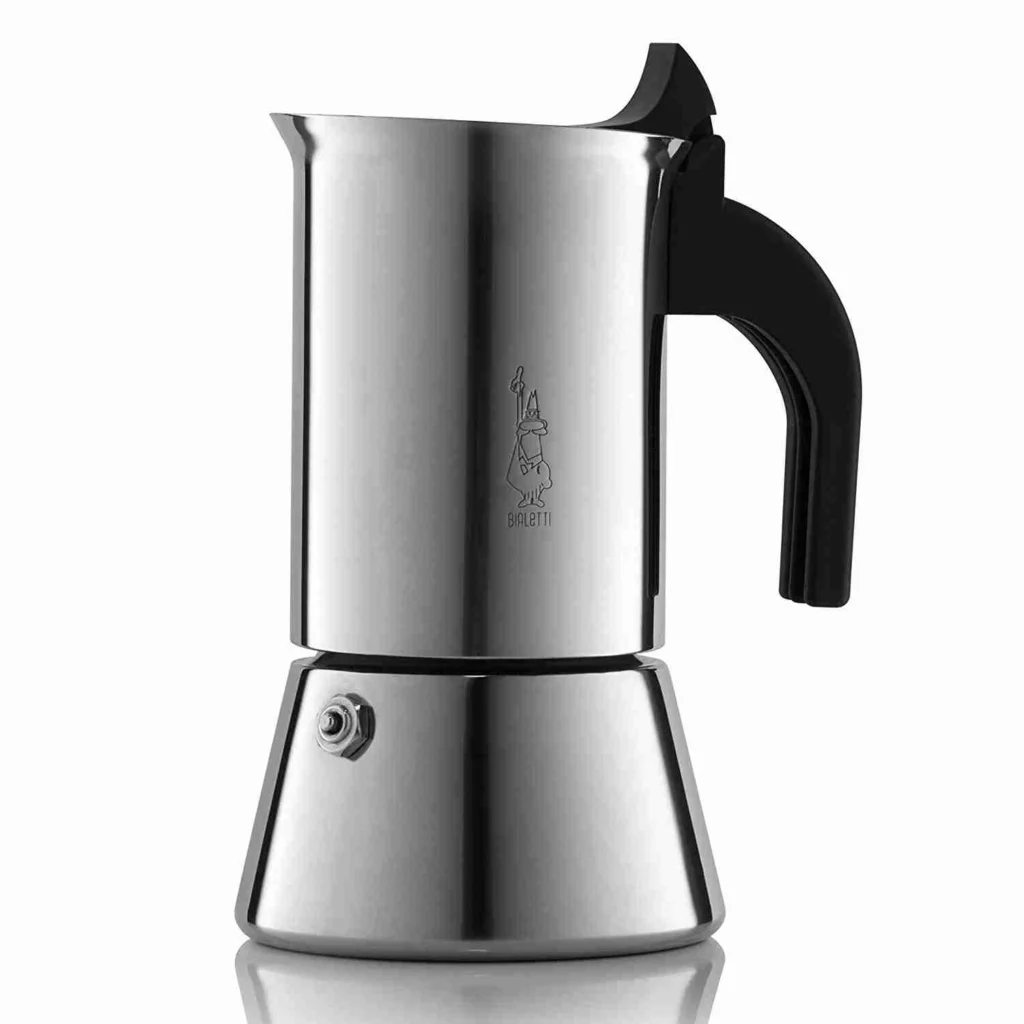
The Venus is Bialetti’s stainless steel moka pot, with a curved, polished design.
It is made from 18/10 stainless steel and, according to Bialetti, works on induction, gas and electric hobs (the 2-cup size isn’t induction-compatible). A good choice if you have an induction hob or want a pot that won’t discolour like aluminium.
Click here to check pricing and to read more reviews
Pros
Makes strong, espresso-style coffee
Quick and easy to use
Easy to clean
Works on induction
Beautiful Italian design
Cons
Not dishwasher friendly
Cuisinox Roma Coffeemaker
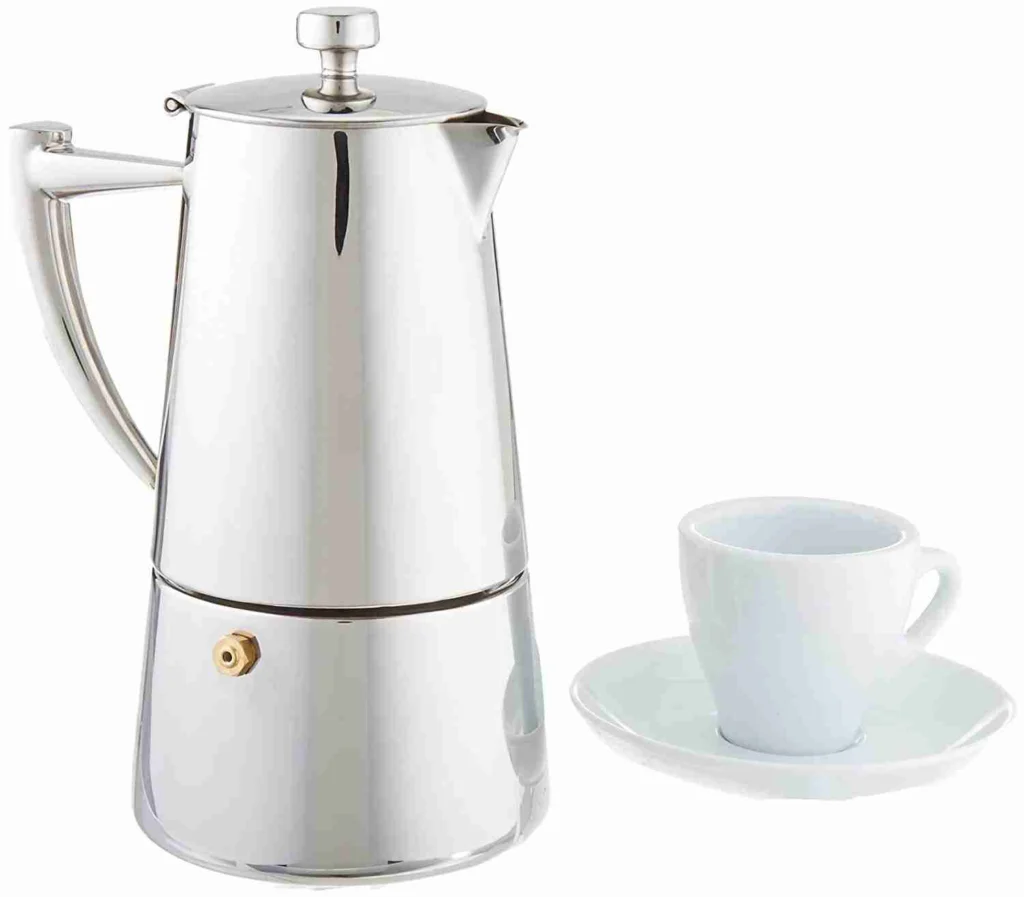
The Roma comes in several sizes up to 10 cups, so it suits households that make coffee for guests.
It is made of heavy-gauge 18/10 stainless steel, works on induction, gas, electric, ceramic and halogen hobs, and comes with an extra replacement gasket (Cuisinox).
Click here to check pricing and to read more reviews
Pros
Makes strong, espresso-style coffee
Comes with extra gasket
Beautiful coffee maker
Works on induction
Heavy-gauge stainless steel
Cons
Not dishwasher friendly
Handle heats up after brewing
Expensive
Alessi Pulcina Italian Coffee Maker
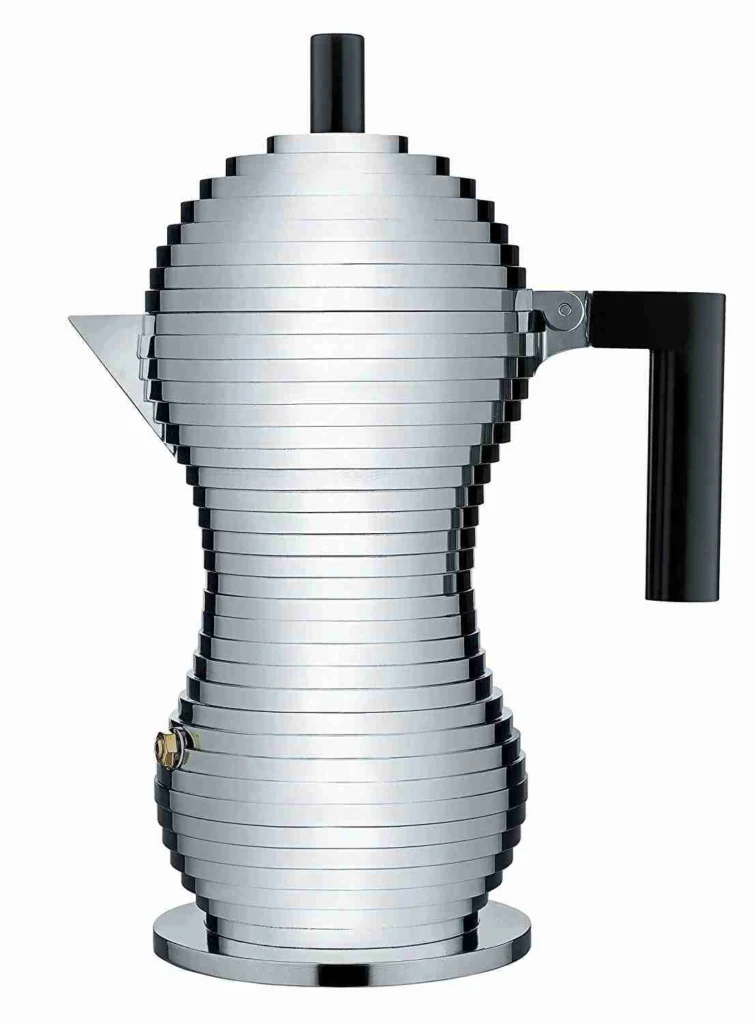
The Alessi Pulcina is a modern take on the moka pot, designed by Michele De Lucchi. It is cast aluminium, in 1, 3 and 6-cup sizes. The standard Pulcina isn’t induction-compatible; Alessi sells a separate induction version.
Click here to check pricing and to read more reviews
Pros
Beautiful Design
High quality, built to last
High-quality Italian design
Cons
Expensive price
Alessi 9090 Espresso Maker
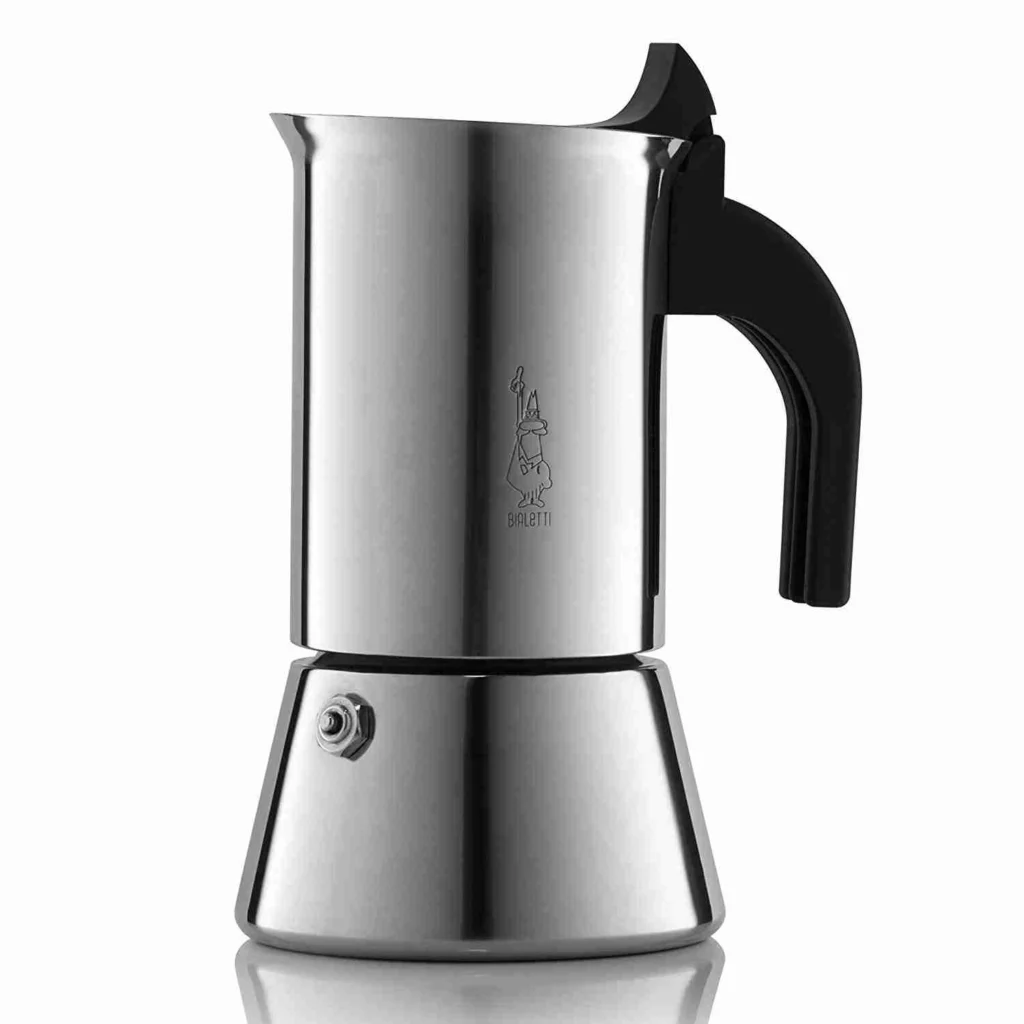
The 9090, designed by Richard Sapper, is a minimalist 18/10 stainless steel moka pot. Alessi says it was the first Alessi product exhibited at the Museum of Modern Art. Sapper’s 1979 design won the Compasso d’Oro; its wide base heats water quickly, and it brews strong moka-style coffee like other stovetop pots.
Instead of screwing together, it closes with a lever lock you operate with one hand. It works on induction (Alessi notes the hob must detect its base, which needs a large enough induction zone).
Click here to check pricing and to read more reviews
Pros
Beautiful minimalistic design
Compasso d’Oro-winning design, in MoMA’s collection
Stainless steel construction
Cons
Handwash only
Expensive
Stovetop percolators
These two are percolators rather than moka pots. They brew larger batches of regular-strength coffee on the stove or over a campfire.
Tops Rapid Brew Stovetop Coffee Percolator
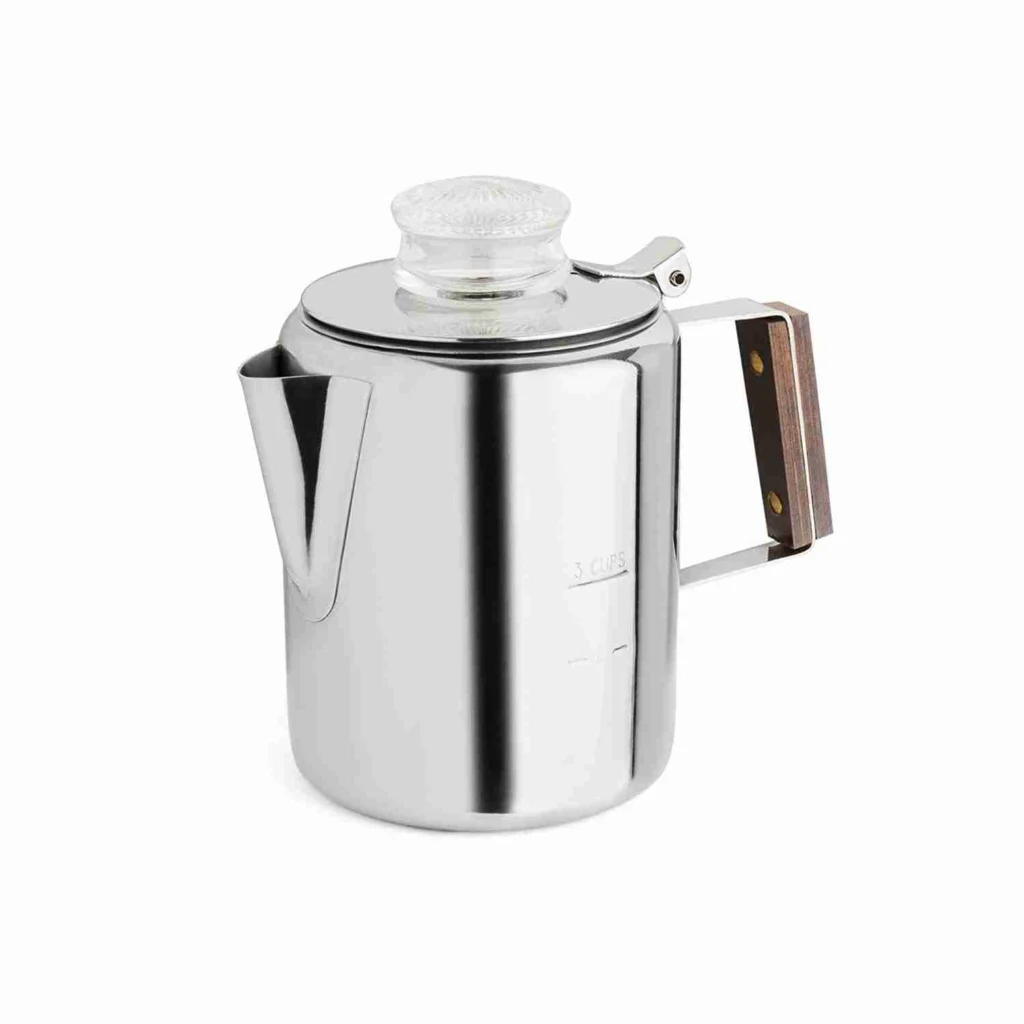
Strictly speaking this is a percolator, not a moka pot: it cycles water up through the coffee repeatedly and makes regular-strength coffee rather than espresso-style coffee. The Tops Rapid Brew has a stainless steel body, a glass knob on the lid so you can watch the brew, and a wooden handle, and comes in sizes up to 12 cups.
Click here to check pricing and to read more reviews
Pros
Makes consistently good coffee
Beautiful wooden handles
Beautiful coffee maker
Stainless steel body
Cons
Not dishwasher friendly
Percolator, not espresso-style
Coletti Bozeman Percolator Coffee Pot
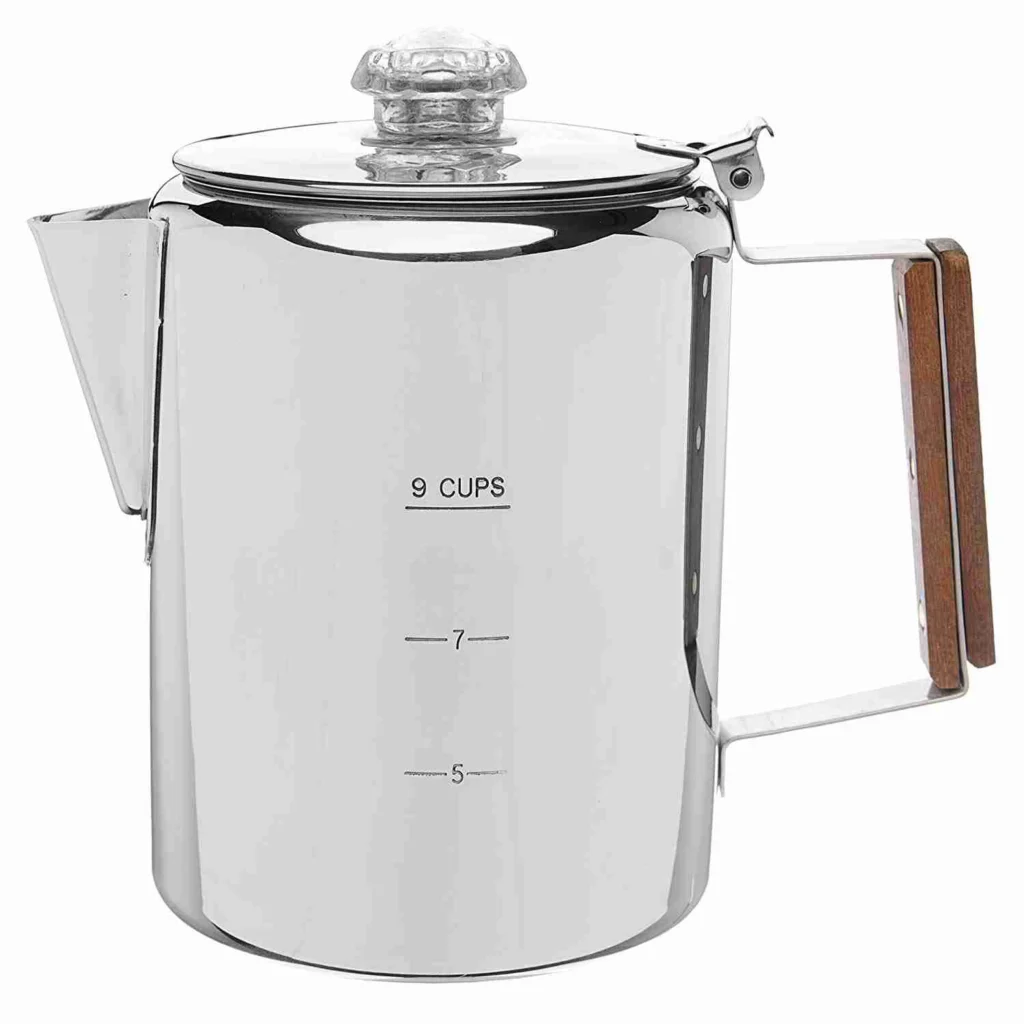
The Coletti Bozeman is a rugged 18/8 stainless steel percolator in 6, 9 and 12-cup sizes, with a glass knob on top so you can watch the coffee. It suits camping as well as the kitchen; see our pick of the best coffee makers for camping. The standard model doesn’t work on induction (there is a separate induction version), and Coletti says it is top-rack dishwasher safe.
Like the Tops, it is a percolator rather than a moka pot, so the coffee is regular strength rather than espresso-style, and some fine grounds can end up in the cup.
Click here to check pricing and to read more reviews
Pros
Rugged stainless steel build
Brews strong coffee
Dishwasher safe
Cons
Coffee grounds present in coffee
May over-extract coffee easily
Possibly discontinued
We’ve kept these two older picks for reference, but they may be hard to find new.
DeLonghi Alicia Electric Moka Espresso Coffee Maker
Availability note: the Alicia (EMK6) is discontinued and is now mostly found second-hand. It is an electric moka pot with its own heating base: it makes 3 to 6 cups, switches off automatically and keeps coffee warm for up to 30 minutes.
Because it doesn’t need a stove, it works anywhere with a power outlet, and the transparent top lets you watch the coffee come through.
That makes it handy for dorm rooms and offices; see our coffee makers for college students.
Pros
Makes stovetop coffee without the need of a stove
Comes with an adaptor so you can make 3 cups or 6 cups
Easy to clean
Travel-friendly
Keeps coffee warm & automatic shutoff
Cons
Rubber seals may fail under pressure
Requires electricity
Bialetti Kitty Espresso Coffee Maker
Availability note: as of October 2026 the Kitty is hard to find new: it is no longer in Bialetti’s own store and is unavailable on Amazon. It is an 18/10 stainless steel moka pot that works on induction (except the 2-cup size) and brews a strong, full-bodied coffee. If you can’t find it, the Bialetti Venus above is a similar stainless, induction-ready alternative.
Pros
Induction-compatible (3-cup and up)
High-quality Italian design
Cons
The lid lets heat escape
Frequently asked questions
What grind and coffee should I use in a moka pot?
Use any beans you enjoy, ground just before brewing. The grind should be medium-fine: finer than drip but coarser than espresso. Don’t tamp it.
Is a stovetop espresso maker the same as a moka pot?
Yes. “Stovetop espresso maker” and “moka pot” are two names for the same Italian brewer that sits on the hob. It makes strong, espresso-style coffee at low pressure rather than true machine espresso. A stovetop percolator is a different device that makes regular-strength coffee.
How much pressure does a moka pot make?
Around 1.5 bar according to Bialetti, compared with about 9 bar for an espresso machine. That’s why moka pot coffee is strong but isn’t true espresso.
Can you make lattes with a stovetop espresso maker?
Yes. Moka pot coffee is strong enough to stand up to milk, so add frothed or steamed milk for a latte-style drink. No frother? See our guide to frothing milk at home.
Why is my moka pot sputtering or leaking?
Usually heat that is too high, coffee ground too fine or tamped, water above the safety valve, or a worn gasket. See our guides to moka pot sputtering and a leaking moka pot.
How do I remove stains and scale from my moka pot?
Mix 1 part white vinegar to 2 parts water, put it in the base and brew it through with no coffee in the basket, then brew once or twice with plain water to rinse. More in how to clean a stovetop espresso maker.
Share this guide
See more Coffee Informer on Google. Add us as a preferred source and our guides show up more in your Top Stories and AI results.
Add as a preferred source on Google
Really good article. I think I might go for the Alessi recommendation.
I have the traditional Mocha gnarly and Dani pot and it’s wonderfully large. How do I keep it warm? Just leave it on the stove on low heat? Thanks.
Hi Wally, I’d avoid leaving it on the stove. Even on low heat the coffee keeps cooking and turns bitter, the same harsh taste you get when a moka pot gurgles too long. Instead, rinse a thermal carafe or insulated flask with hot water and pour the coffee in as soon as it’s brewed. It stays hot for a good while without tasting stewed.
Edmond
I’m still confused about the size pot. Some say 1 cup, 3 or 6. Do you add some hot water to the finished product? Assuming it’s pretty strong, but maybe some like it that way. Thanks for all the good info!
Hi Tracy, the confusion is fair. A “cup” on a moka pot means a small espresso-size serving, not a mug, which is why sizes run from 1 to 18 cups. Choose by how many of those small servings you want per brew, not how many mugs.
The coffee is strong and concentrated, and yes, plenty of people top it up with hot water like an Americano or add steamed milk. Taste it straight first, then add hot water until it suits you.
Edmond